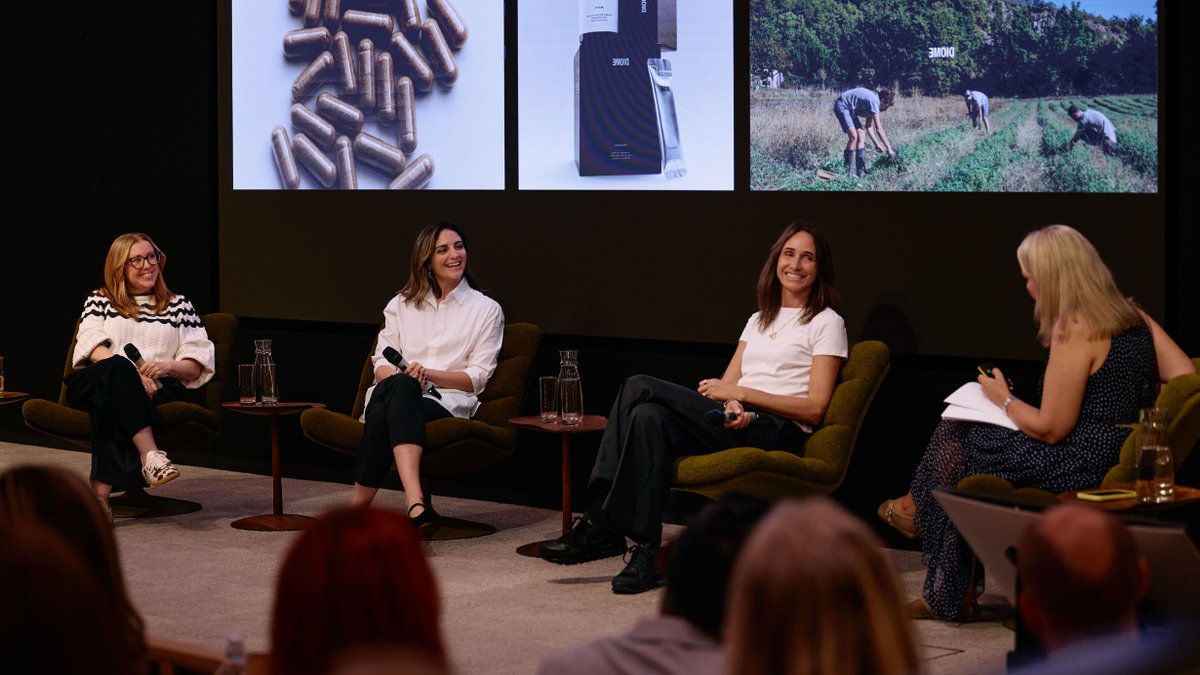
TheIndustry.beauty hosted its debut summit in London on October 2, 2026, bringing together executives from Harrods, Lush, Shiseido, Aesop, and other major retailers for a day of networking and strategic discussion. Held at The Forum under the theme “Beauty [Un]Bound,” the event focused on the forces reshaping the future of beauty retail. The programme featured keynotes, panel discussions, and presentations from logistics experts, technology providers, and brand founders.
Beauty, Unbound by Friction: Supply Chains and Customer Experience
Logistics provider Noatum Logistics presented on the critical role of supply chain agility in supporting emerging beauty brands. Head of Airfreight Laura Odell noted that brands often struggle to maintain consistency across multiple sales channels while meeting rising customer expectations for speed and visibility. Odell stated that “consumers expect choice, speed, visibility and frictionless returns wherever they shop.” She emphasized that facilities must be designed with scalability in mind to handle demand spikes, whether caused by a viral moment or a seasonal rush.
Odell added that customers are increasingly interested in what happens behind the scenes, specifically regarding delivery options and return processes. She explained that loyalty can be won or lost in these post-purchase moments, making transparency essential. Bleckmann, a summit partner, explored how tailored logistics solutions help businesses of all sizes manage scale and reduce returns. Stephanie von Albert of Douglas, which operates in 22 countries and 1,900 stores, highlighted the need for seamless logistics to deliver a consistent experience across both online and offline channels.
Group Operations Director Lewe Goldman stressed that resilience is key. He noted that while forecasting is critical, it is rarely perfect. Bleckmann’s Isabel Schoormans described their approach as an extension of a client’s brand, relying on transparency and open communication rather than rigid plans.
While these sessions focused on the mechanics of getting products to shelves, the practical effect on the shopper is profound. When a customer can order online and pick up in-store without hassle, or receive a return within days, the experience feels frictionless. If the logistics fail—stocking errors, delayed shipping, or complicated returns—the perceived value of the brand drops instantly, regardless of how good the product is.
Related Post: Beauty brands prove purpose and performance outlast trends
Hyper-Growth and the Search for Identity
The summit also addressed the rise of hyper-growth beauty brands. Colette Laxton of The Inkey List, Marina Kalenchyts of Wonderskin, and Billie Faricy-Hyett of Cult Beauty discussed how these companies scale rapidly while maintaining a distinct identity. Laxton noted that handling omnichannel retail has moved from a long-term goal to an immediate reality. Faricy-Hyett, representing retailers, emphasized the challenge of forecasting. She explained that stores must coach brands through unexpected performance, whether a product goes viral or underperforms.
Resonance and Relevance in a Crowded Market
TheIndustry.beauty’s debut summit brought together some of the UK’s most forward-thinking beauty leaders for a day of networking, insight and strategic thinking. Since 25 August, Sophie Smith has served as Executive Vice President for North and Central Europe and Global Commercial Strategy at the Milanese cosmetics brand Kiko Milano. She kicked off the summit by discussing her experience, what attracted her to the brand, the omnichannel growth opportunity and the evolving role of AI in commerce and the beauty industry. Kiko operates in 70 countries through different partnerships and channels.
Mitchell emphasized that beauty lends itself particularly well to in-person experiences. She noted that “We’re all human, and people want to be around other people and see products in real life,” which makes the physical store a key touchpoint. In-store, Mitchell said the aim is to create an environment where customers can explore, ask for advice and have a friendly, approachable experience with make-up that is centred on them and their individual self-expression. She added that she has seen many brands go viral but struggle to sustain that momentum, noting that the difficult part is not necessarily cutting through, but maintaining that momentum over time.
With 60% of shoppers visiting stores for inspiration, retail is no longer simply a place to sell – it is a platform to tell your story. Stores are there to let customers experience products, make trial effortless and exciting, and provide reassurance. Some 82% of shoppers also say the ability to easily compare products is an important driver of purchase. This raised the question of whether brands should start thinking of stores more as platforms than destinations, and rethink how physical displays are used. We’ve been talking about omnichannel for 10 years, but now it’s real, it’s here, and handling how we play across different channels and engage with different customers is the challenge.
Jonathan Grubin, founder and CEO of sampling platform SoPost, emphasised that media can tell you about a product, but beauty is more personal than that. “What trial delivers is the taste, touch and smell – the first use of a product you’ve chosen to try in your own home – and it goes so much further than advertising,” he said. 85% of impressions don’t last long enough to create recall or drive purchase. “The more you can grow trust and confidence, the more you can see a meaningful and measurable impact on sales,” shared Grubin. This is where sampling comes in. An ad tells a consumer that a product is good; a product sample lets them find out for themselves.


